Lyttelos – The Listening Body
I am a classical pianist with an artistic doctorate and an active performing career. My work explores listening as a shared, embodied practice, and — grounded in phenomenology and neuroscience, and shaped by my own experience with Parkinson’s — investigates how music can influence perception, movement, and experience.
Jeg er klassisk pianist med en kunstnerisk doktorgrad. Jeg jobber som utøvende musiker men er også opptatt av lytting som en delt og kroppslig praksis. Med utgangspunkt i fenomenologi og nevrovitenskap – og med egen erfaring med Parkinson – undersøker jeg hvordan musikk kan påvirke persepsjon, bevegelse og erfaring i møte med sykdommen.








Episodes

Jun 12, 2026
Jun 12, 2026
24 min
Norsk (engelsk under)Piotr og Annabel har lyst til å lage en serie podcastepisoder der vi utforsker hva det vil si å lytte — til hverandre, til musikk, til kroppen og sinnet, og til verden rundt oss.
Gjennom ærlige samtaler, guidede meditasjoner, personlige historier og refleksjoner undersøker vi hva det betyr å være virkelig til stede — i oss selv, med hverandre og midt i det vanlige livet.
Samtalene våre beveger seg mellom filosofi og levd erfaring: fra pust og oppmerksomhet til sykdom, musikk, lidelse, ro, oppvåkning og utfordringen med å holde seg forankret i en støyende og rastløs verden.
Annabel, som er musiker og forsker og lever med Parkinsons sykdom, bringer inn refleksjoner fra egne erfaringer med den forandrende kroppen, oppmerksomhet, sårbarhet, musikk og søken etter nærvær i hverdagen.
I den aller første episoden begynner vi ganske enkelt der vi er:med spenning, pust, lyder fra omgivelsene, vandrende tanker og forsøket på å lytte innover.
Piotr leder en meditasjon mens Annabel reflekterer over hva som skjer i sinnet når stillheten blir avbrutt av rytme, støy, motstand og oppmerksomheten selv. Sammen utforsker vi om meditasjon handler om å flykte fra livet — eller om å lære å møte det på en annen måte.
Fra Cala de Mijas, utenfor Málaga i Spania — velkommen.
EnglishPiotr and Annabel would like to create a series of podcast episodes exploring what it means to listen — to each other, to music, to the body and mind, and to the world around us.
Through honest conversations, guided meditations, personal stories, and reflections, we investigate what it means to be truly present — within ourselves, with one another, and in the middle of ordinary life.
Our conversations move between philosophy and lived experience: from breath and awareness to illness, music, suffering, calm, awakening, and the challenge of staying grounded in a noisy and restless world.
Annabel, a musician and researcher living with Parkinson’s disease, brings reflections from her own experience of the changing body, attention, vulnerability, music, and the search for presence in everyday life.
In the very first episode, we simply begin where we are:with tension, breath, sounds from the surroundings, wandering thoughts, and the attempt to listen inward.
Piotr guides a meditation while Annabel reflects on what happens in the mind when silence is interrupted by rhythm, noise, resistance, and attention itself. Together, we explore whether meditation is about escaping life — or learning how to meet it differently.
From Cala de Mijas, outside Málaga, Spain — welcome.

Mar 29, 2026
Mar 29, 2026
39 min
Lyttelos – The Listening Body
In this episode, I talk with Finn Upham (RITMO Centre for Interdisciplinary Studies in Rhythm, Time and Motion) about what happens in the body when we listen to music.
Starting from a research concert in Oslo—where audience members’ breathing, heart rate, and movement were measured—the conversation explores how listening is not just mental or emotional, but deeply physical.
Why do we sometimes hold our breath in music? How can listeners unconsciously breathe with performers? And what does this reveal about music as a shared, human experience?
From Beethoven's Moonlight Sonata to experimental listening practices, this episode invites you to rediscover music through the body.
Finn Upham is a researcher in music cognition and music psychology, with a particular focus on how the body responds to music. He is a postdoctoral researcher at RITMO Centre for Interdisciplinary Studies in Rhythm, Time and Motion at the University of Oslo, where he studies the relationship between music, breathing, heart rate, and movement, as well as the interaction between performers and audiences.
In his research, he explores how listeners do not only hear music, but also physically participate in it, for example through breathing and bodily resonance. He has a background as a musician, with experience in singing and wind instruments, and combines this with a strong foundation in mathematics and analytical methods.
Through his work, he contributes to a deeper understanding of how music is experienced in the body, and how listening is an active, embodied, and fundamentally human process.

May 5, 2024
May 5, 2024
1 hr 3 min
There is a way to listen to music so it touches the very core of yourself. I was so fortunate to discover this almost 30 years ago through the teachings of the Spanish conductor Jordi Mora. With these five newly made conversations with him, I invite you to a very special journey into this fascinating and deeply moving world of music. His unique teachings opens up the inner world of music in a way that creates connections to our life experiences as a human being.
I met up with him in Barcelona to once again delve into the fascinating world of phenomenology of music, as this approach is called. The result are these 5 podcast episodes. I hope you will feel inspired after listening to it! Annabel Guaita is frequently touring in Norway and abroad with the concert lecture: The Art of Listening- the inner journey through musicFor feedback, questions or booking: post@lyttelos.no Subscribe on YouTube: www.youtube.com/@AnnabelGuaita
Episode 5 Summary of the essential ideas.SummaryIn this final episode of the conversations with Jordi Mora, we revisited the main points we discussed throughout our conversation on musical phenomenology. We delved into the essence of phenomenology, emphasizing the importance of understanding the deep but simple ideas behind it. We explored how phenomenology helps us grasp the cosmic relationships present in music, showing the interconnectedness of human beings, nature, and music.We analyzed music pieces by Schumann and Schoenberg, highlighting how the cosmic principles remain consistent across various musical genres and styles. We focused on the importance of recognizing subtle variations in tension, culminations, and repetitions in music to achieve a unified, harmonious piece.The conversation emphasized the significance of understanding the cosmic nature of music, transcending cultural boundaries and traditional harmony. By applying the principles of phenomenology to music, we deepen our awareness of the universal connections present in all musical compositions.Ultimately, we celebrated the enduring fascination and continual inspiration found in exploring the intricacies of music through the lens of phenomenology, highlighting the timeless and boundless nature of musical expression and interpretation.
0:00:15 Introduction to Musical Phenomenology0:06:04 Phenomenology as a Tool in Music Understanding0:18:05 The Importance of Musical Culmination0:31:44 Exploring Musical Relationships in Harmony0:39:31 Understanding the Building of Articulations0:49:06 Exploring Tension and Release in Music0:56:34 Essence of Music and Phenomenology1:00:40 Applying Phenomenology to All Music Genres
JORDI MORA, conductor
Born in Barcelona, he begins his musical studies at the city's Music Conservatory. He graduates at the Höchschule für Musik in Würzburg as an oboist, and graduates in Musicology and Philosophy at the University of Munich with the thesis "Organisation of the vertical functions in the instrumentation of the symphonic work by Beethoven".
He studies orchestra conducting and phenomenology of music primarily with Sergiu Celibidache, and he has attended masterclasses and conducting courses at the University of Mainz, the Münchner Philarmoniker in Munich, and other courses in Trier, London, Stuttgart, and Paris. He has been principal conductor of the National Orchestra of Greece and of the Orquestra Simfònica del Vallès.
He regularly conducts orchestras in Germany, Spain, France, the United States, Russia, Romania, Greece, Argentina and Venezuela as a guest conductor.
At the same time, he is also involved in many pedagogical projects, especially in Argentina (Fundación Cultural), Switzerland, Spain, Italy and Germany. In 2004 he became professor of orchestra conducting at the Escola Superior de Música de Catalunya (ESMUC )and from 2010 to 2015, guest professor at the Grieg Akademy in Bergen (Norway).
He is currently conductor of the Symphony Orchestra of "Segle XXI" and of the Bruckner Akademie Orchester. With this last orchestra, he is performing the complete symphonic works of this composer.
He was appointed as principal guest conductor of the Orchestre Philharmonique du Lebanon (LPO) and Franz Schubert Philharmonie as well.
Contactwww.jordi-mora.comjordimoragriso@gmail.com
Apr 28, 2024
Apr 28, 2024
36 min
There is a way to listen to music so it touches the very core of yourself. I was so fortunate to discover this almost 30 years ago through the teachings of the Spanish conductor Jordi Mora. With these five newly made conversations with him, I invite you to a very special journey into this fascinating and deeply moving world of music. His unique teachings opens up the inner world of music in a way that creates connections to our life experiences as a human being.
I recently I met up with him in Barcelona to once again delve into the fascinating world of phenomenology of music, as this approach is called. The result are these 5 podcast episodes. I hope you will feel inspired after listening to it!
Annabel Guaita is frequently touring in Norway and abroad with the concert lecture The Art of Listening- the inner journey through music
For feedback, questions or booking post@lyttelos.no
Episode 4The universe of relationship in music searching for unity.Musical examples: Bach Prelude in C, Beethoven Sonate Pathetique 2nd mvt.SummaryIn this lecture, we delved into the practical applications of the concepts we discussed previously. We explored the notion of evolution in music as a continuous process, drawing parallels with the works of Bach. Through the lens of Bach's compositions, we analyzed the interplay between continuity, repetition, and the absence of such elements.
In conclusion, the lecture highlighted the timeless appeal of composers like Bach and Beethoven, whose mastery lies in their ability to craft music that transcends mere notes and rhythms, offering profound insights into the human experience and the beauty of artistic expression.
JORDI MORA, conductor
Born in Barcelona, he begins his musical studies at the city's Music Conservatory. He graduates at the Höchschule für Musik in Würzburg as an oboist, and graduates in Musicology and Philosophy at the University of Munich with the thesis "Organisation of the vertical functions in the instrumentation of the symphonic work by Beethoven".
He studies orchestra conducting and phenomenology of music primarily with Sergiu Celibidache, and he has attended masterclasses and conducting courses at the University of Mainz, the Münchner Philarmoniker in Munich, and other courses in Trier, London, Stuttgart, and Paris. He has been principal conductor of the National Orchestra of Greece and of the Orquestra Simfònica del Vallès.
He regularly conducts orchestras in Germany, Spain, France, the United States, Russia, Romania, Greece, Argentina and Venezuela as a guest conductor.
At the same time, he is also involved in many pedagogical projects, especially in Argentina (Fundación Cultural), Switzerland, Spain, Italy and Germany. In 2004 he became professor of orchestra conducting at the Escola Superior de Música de Catalunya (ESMUC )and from 2010 to 2015, guest professor at the Grieg Akademy in Bergen (Norway).
He is currently conductor of the Symphony Orchestra of "Segle XXI" and of the Bruckner Akademie Orchester. With this last orchestra, he is performing the complete symphonic works of this composer.
He was appointed as principal guest conductor of the Orchestre Philharmonique du Lebanon (LPO) and Franz Schubert Philharmonie as well.
Contactwww.jordi-mora.comjordimoragriso@gmail.com
Apr 21, 2024
Apr 21, 2024
46 min
There is a way to listen to music so it touches the very core of you as a human being. I was so fortunate to discover this almost 30 years ago through the teachings of the Spanish conductor Jordi Mora. With these five newly made conversations with him, I invite you to a very special journey into this fascinating and deeply moving world of music.
His unique teachings creates connections to our life experiences as a human being. I recently I met up with him in Barcelona to once again delve into the fascinating world of phenomenology of music, as this approach is called. The result are these 5 podcast episodes. I hope you will feel inspired after listening to it!
Episode 3: The irreplaceable nature of live music in capturing the true essence of the Here and Now.Musical example will come in Ep 4
SummaryWe explore the dynamic nature of music, consciousness, and human experience. usic is a continuously evolving entity, shaped by sound relationships and human consciousness. We discuss the importance of embracing the present moment in music, cautioning against becoming detached through technology reliance. The conversation also delves into the role of tempo, harmony, and live performances in creating meaningful musical experiences.
The discussion delves into the intricate relationships between sounds, the importance of human consciousness in perceiving music, and the role of harmony in creating meaningful musical experiences. As the conversation progresses, we touch upon the significance of embracing the present moment in music, allowing for spontaneity, rebirth, and unique experiences with each performance. Furthermore, we explore the role of tempo in music and the importance of finding the right balance in pacing to fully grasp the relationships within a piece. Jordi Mora highlight the dangers of becoming detached from the present moment through dependence on recordings, urging listeners to engage fully with music in its live form to truly appreciate its depth and authenticity. The conversation also touches on the challenges faced by symphony orchestras in attracting audiences, especially among younger generations, and the need to reconnect with the profound experiences that live music.
JORDI MORA, conductor
Born in Barcelona, he begins his musical studies at the city's Music Conservatory. He graduates at the Höchschule für Musik in Würzburg as an oboist, and graduates in Musicology and Philosophy at the University of Munich with the thesis "Organisation of the vertical functions in the instrumentation of the symphonic work by Beethoven".
He studies orchestra conducting and phenomenology of music primarily with Sergiu Celibidache, and he has attended masterclasses and conducting courses at the University of Mainz, the Münchner Philarmoniker in Munich, and other courses in Trier, London, Stuttgart, and Paris. He has been principal conductor of the National Orchestra of Greece and of the Orquestra Simfònica del Vallès.
He regularly conducts orchestras in Germany, Spain, France, the United States, Russia, Romania, Greece, Argentina and Venezuela as a guest conductor.
At the same time, he is also involved in many pedagogical projects, especially in Argentina (Fundación Cultural), Switzerland, Spain, Italy and Germany. In 2004 he became professor of orchestra conducting at the Escola Superior de Música de Catalunya (ESMUC )and from 2010 to 2015, guest professor at the Grieg Akademy in Bergen (Norway).
He is currently conductor of the Symphony Orchestra of "Segle XXI" and of the Bruckner Akademie Orchester. With this last orchestra, he is performing the complete symphonic works of this composer.
He was appointed as principal guest conductor of the Orchestre Philharmonique du Lebanon (LPO) and Franz Schubert Philharmonie as well.
Contactwww.jordi-mora.comjordimoragriso@gmail.com
Apr 14, 2024
Apr 14, 2024
1 hr 25 min
There is a way to listen to music so it touches the very core of you as a human being. I was so fortunate to discover this almost 30 years ago through the teachings of the Spanish conductor Jordi Mora. With these five newly made conversations with him, I invite you to a very special journey into this fascinating and deeply moving world of music. His unique teachings opens up the inner world of music in a way that creates connections to our life experiences as a human being.
I recently I met up with him in Barcelona to once again delve into the fascinating world of this approach that is called phenomenology of music. The result are these 5 podcast episodes. I hope you will feel inspired after listening to it! Annabel Guaita is frequently touring in Norway and abroad with the concert lecture: "The Art of ListeningFor feedback, questions or booking: post@lyttelos.no www.youtube.com/@AnnabelGuaitaEpisode 2: Pulsation as unifying energy in musicMusical examples: Grieg Arietta opus 12, Bach C major Prelude and Schumann Kinderszenen op 15.
SummaryIn this episode, we delve into the intricate relationship between phenomenology and music interpretation. We explore how rhythm, melody, and harmony intertwine to create unity in musical compositions. Pulsation emerges as a unifying force, shaping coherence, tension, and relaxation in music, crucial for expressive performances. Through examples from Bach and Schumann, we highlight the role of pulsation in guiding rhythmic and expressive unity among musicians. The discussion extends to chaos, contrasting it with structured tension in music, emphasizing the necessity of a reference system for emotional balance. Pulsation is underscored as a guiding element for the emotional trajectory of music, leading to a profound connection and understanding of its essence. We reflect on the quest for unity in music, drawing parallels with the broader philosophical journey towards self-realization, highlighting the universal pursuit of unity across diverse disciplines.
JORDI MORA, conductor
Born in Barcelona, he begins his musical studies at the city's Music Conservatory. He graduates at the Höchschule für Musik in Würzburg as an oboist, and graduates in Musicology and Philosophy at the University of Munich with the thesis "Organisation of the vertical functions in the instrumentation of the symphonic work by Beethoven".
He studies orchestra conducting and phenomenology of music primarily with Sergiu Celibidache, and he has attended masterclasses and conducting courses at the University of Mainz, the Münchner Philarmoniker in Munich, and other courses in Trier, London, Stuttgart, and Paris. He has been principal conductor of the National Orchestra of Greece and of the Orquestra Simfònica del Vallès.
He regularly conducts orchestras in Germany, Spain, France, the United States, Russia, Romania, Greece, Argentina and Venezuela as a guest conductor.
At the same time, he is also involved in many pedagogical projects, especially in Argentina (Fundación Cultural), Switzerland, Spain, Italy and Germany. In 2004 he became professor of orchestra conducting at the Escola Superior de Música de Catalunya (ESMUC )and from 2010 to 2015, guest professor at the Grieg Akademy in Bergen (Norway).
He is currently conductor of the Symphony Orchestra of "Segle XXI" and of the Bruckner Akademie Orchester. With this last orchestra, he is performing the complete symphonic works of this composer.
He was appointed as principal guest conductor of the Orchestre Philharmonique du Lebanon (LPO) and Franz Schubert Philharmonie as well.
Contactwww.jordi-mora.comjordimoragriso@gmail.com
Apr 6, 2024
Apr 6, 2024
1 hr 4 min
A Saturday morning conversation with the pianist Leif Ove Andsnes. Is it possible to listen to music in a way that reveals its inner qualities? Musical Examples:Grieg: Sonata opus 7 e minorLiszt: Ballade nr 2 in b minorTveitt: Sonata nr 29Leif-Ove Andsnes and I are sitting by my Piano Steinway (from 1916) in my flat in Breistølen, Bergen, reminiscing about our shared past studying at Bergen Musikkonservatorium. We reflect on the profound influence the mentor, Jiri Hlinka, had on our musical paths, igniting in us a deep love for music. Leif-Ove recalls how Jiri's passion for music inspired him to pursue a career as a musician, emphasizing the importance of mentorship and individual interpretation in music education. Our conversation delves into the intricacies of musical expression, highlighting the timeless value of one-on-one teaching in preserving musical tradition and passing on knowledge.Our conversation evolves to focus on the nuances of musical interpretation within Grieg's sonata, emphasizing the interplay between harmony, tension, and emotional resonance. We explore how harmonies can evoke different emotional landscapes and guide listeners through musical journeys. By dissecting the sonata's rhythmic complexities and thematic contrasts, we unravel the symmetrical and asymmetrical elements that drive the music's flow.Reflecting on Grieg's use of repetition and transitions, we analyze the emotional storytelling within the sonata, highlighting the importance of creating a cohesive narrative. Examining the sonata's coda, we delve into Grieg's creative choices and the intricate interplay of melody, harmony, and rhythm. Through our discussion, we aim to deepen appreciation for the emotional nuances that shape Grieg's composition and drive its narrative forward.
Enjoy!Do you want to book a live concert lecture based on this approach? Annabel Guaita is frequently touring with "The Art of Listening". For booking: post@lyttelos.no More info: https://www.lyttelos.no/english Subscribe on YouTube: www.youtube.com/@AnnabelGuaita
Mar 31, 2024
Mar 31, 2024
1 hr 5 min
There is a way to listen to music so it touches the very core of you as a human being. I was so fortunate to discover this almost 30 years ago through the teachings of the Spanish conductor Jordi Mora. With these five newly made conversations with him, I invite you to a very special journey into this fascinating and deeply moving world of music.
His unique teachings opens up the inner world of music in a way that creates connections to our life experiences as a human being. I recently I met up with him in Barcelona to once again delve into the fascinating world of this approach that is called phenomenology of music. The result are these 5 podcast episodes. I hope you will feel inspired after listening to it! Annabel Guaita is frequently touring in Norway and abroad with the concert lecture: "The Art of ListeningFor feedback, questions or booking: post@lyttelos.no www.youtube.com/@AnnabelGuaitaEpisode 1: Introduction. What is musical phenomenology? Musical example: Edvard Grieg Heimweh opus 57 nr 6 SummaryIn this extensive conversation, we delve into the deep connections between music, phenomenology, and life experiences. Mora recounts personal experiences with his renowned teacher, Sergiu Celibidache and how these interactions shaped his understanding of music. They touch upon the importance of evolution in music and life, emphasizing the continual change and growth inherent in both spheres. Breathing is highlighted as a key element in music, reflecting the essence of continuity and evolution. The discussion delves into the significance of unity in music, aiming for a cohesive whole that reflects the essence of a piece. "The four Essentialities" are outlined, covering evolution, breathing, continuity, and the ultimate goal of oneness within a musical composition. Mora emphasizes the experiential nature of phenomenology, noting that true understanding comes from personal engagement and interpretation rather than written texts. In conclusion, the conversation underscores the richness of direct musical experience in conveying the essence of phenomenology and life itself. JORDI MORA, conductor
Born in Barcelona, he begins his musical studies at the city's Music Conservatory. He graduates at the Höchschule für Musik in Würzburg as an oboist, and graduates in Musicology and Philosophy at the University of Munich with the thesis "Organisation of the vertical functions in the instrumentation of the symphonic work by Beethoven".
He studies orchestra conducting and phenomenology of music primarily with Sergiu Celibidache, and he has attended masterclasses and conducting courses at the University of Mainz, the Münchner Philarmoniker in Munich, and other courses in Trier, London, Stuttgart, and Paris. He has been principal conductor of the National Orchestra of Greece and of the Orquestra Simfònica del Vallès.
He regularly conducts orchestras in Germany, Spain, France, the United States, Russia, Romania, Greece, Argentina and Venezuela as a guest conductor.
At the same time, he is also involved in many pedagogical projects, especially in Argentina (Fundación Cultural), Switzerland, Spain, Italy and Germany. In 2004 he became professor of orchestra conducting at the Escola Superior de Música de Catalunya (ESMUC )and from 2010 to 2015, guest professor at the Grieg Akademy in Bergen (Norway).
He is currently conductor of the Symphony Orchestra of "Segle XXI" and of the Bruckner Akademie Orchester. With this last orchestra, he is performing the complete symphonic works of this composer.
He was appointed as principal guest conductor of the Orchestre Philharmonique du Lebanon (LPO) and Franz Schubert Philharmonie as well.
Contactwww.jordi-mora.comjordimoragriso@gmail.com
Jul 1, 2023
Jul 1, 2023
31 min
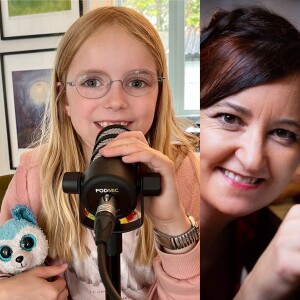
Annabel har fått besøk av en av sine pianoelever, Agnes. Sammen spiller og filosoferer de over forbindelsene mellom musikken og livet. Komponisten Ruth Bakke har laget 25 små pianostykker for barn med heftet "Pano Piano" der pianisten selv må være både lyttende og medskapende. Dette har inspirert Agnes til å både improvisere og komponere egne stykker. Agnes spiller 'Brumle Buff' fra dette heftet. Musikken er notert grafisk (tegnet) og Agnes forteller selv hvordan hun skaper sin egen fortelling og 'melodi' i dette stykket. Hun har også laget en sang til yndlingsbamsen sin, Ulva.
Om podcastenAnnabel Guaita er pianist og har utviklet konseptet Lyttelos, en formidlings- og utforskningsmetode for å bli kjent med vårt potensial som lytter.www.lyttelos.no
May 27, 2023
May 27, 2023
34 min
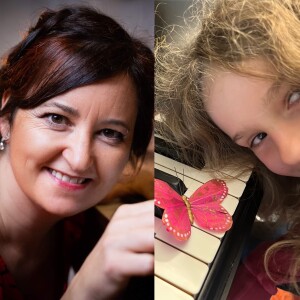
Velkommen til en god søndagsmorgen i Breistølen. Solen skinner og fuglene kvitrer når Annabel får sin nabo og pianoelev Helene på 10 år på besøk. Sammen filosoferer de over hva som gjør musikken de øver på mer eller mindre levende. Helene liker å lage musikk selv og holder på med en improvisasjon rundt to sommerfugler som leker. Hun spiller også musikk av Edvard Grieg. Hun har nylig spilt konsert og kjent at det har kriblet i magen før hun skulle på scenen, spesielt når hun skal spille musikk som er skrevet av andre enn henne selv. Vi undersøker denne følelsen som vi voksne kaller nervøsitet. Hvor kommer denne følelsen fra og hva er det egentlig vi er redd for skal skje? Helene har sine teorier og mener nervøsitet også fint kan kalles overglede! Det er mange lag i denne samtalen. Jeg selv kjenner på en ærbødighet over å få følge en 10 åring inn i hennes fantasifulle tolkning av verden. Klarer vi å få samtalen blir som en musikalsk improvisasjon, der temaene skal få utvikle seg og undersøkes med nysgjerrighet? Vil jeg klare den lyttekunsten det er å følge henne innover i hennes argumentasjon? Kan jeg unngå å legge en voksens føring, men heller bejae det hun sier?Om podcastenAnnabel Guaita er pianist og har utviklet konseptet Lyttelos, en formidlings- og utforskningsmetode for å bli kjent med vårt potensial som lytter.Se de ulike foredragene her: www.lyttelos.no